Being knowledgeable about your diesel fuel system as a boat owner can be really important. There are a lot of coastguard requirements regarding the installation of fuel systems on boats and are covered under ABYC’s H-24 gasoline and H-33 diesel fuel systems. A lot of problems can be traced to poorly maintained fuel systems. This article is written to help the typical boater better understand how diesel systems work on boats.
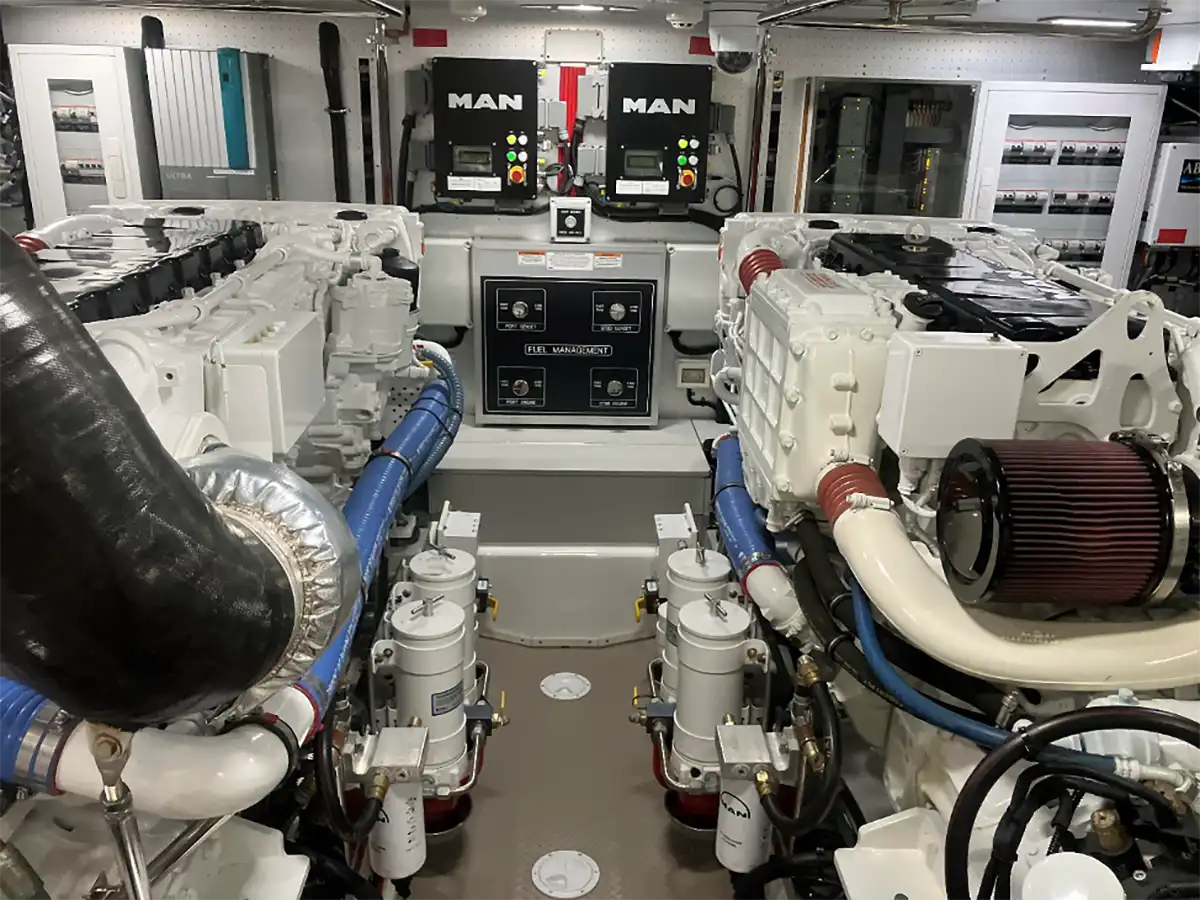 Fuel manifolds: Manifolds control fuel from the fuel tanks to the engine or engines, generator or generators. Crossover valves are used to balance the fuel in the tanks via gravity. It is common with diesel engine driven boats to have at least two fuel tanks. It is not uncommon for large craft to have as many as six fuel tanks and a day tank with a fuel polishing system. Large craft can hold thousands of gallons of diesel. Fuel management can get really complicated.
Return manifolds control to what tank fuel is being returned to. The engine fuel injector pump feeds fuel in a loop at high pressure not only to fire the injectors but to cool the injectors before returning the unused diesel back to the fuel tank. If the return fuel is delivered to the wrong tank. The tank can overfill and vent fuel overboard or drain into the bilge and activate the bilge pump sending diesel into the water. Return fuel can be at verry high pressure and could rupture a hose or blow hose off a hose barb if the wrong return valve is closed. Fuel hoses must have two hose clamps and are marked with US coast guard burn rating as USG type 1 or type 2 for comical vessels. The supply and return manifolds should mirror each other. In other words, supply valves should match the respective return valves. They should be easy to read and well labeled.
Fuel tanks: Most fuel tanks are made of aluminum. When tanks have water and bio matter sitting on the bottom of the tank. They can have anaerobic decay that can destroy the aluminum bottom of the tank. Aluminum tanks can have weld issues from vibration or a bad spot in the weld and will need to be repaired.
Older vessels that have black iron tanks or welded steel are especially prone to rust from water sitting on the top of the tank or water sitting inside the bottom of the tank. Iron tanks may have a drain in the conner of the tank to drain off the water that collects at the bottom of the tank. If you are looking at a boat with old black iron tanks, make sure they are well coated and in good shape.
Tanks can be made of fiberglass and can be built into the vessel. Fiberglass tanks can develop issues do to the construction of the tank, that may show up later on in life and will need repair.
Depending on age and condition, all fuel tanks should be inspected and cleaned of bio matter and debris from inside the tank. If you are purchasing an older boat, it is wise to make sure your surveyor pays close attention to the fuel system.
Primary Fuel filters: Your fuel system will have at least two sets of filters that supply fuel to an engine. The primary filter is located on the engine. The secondary filters are normally Parker Raycor brand fuel filters and are located off the engine. Primary engine filters can be bought as an OEM part or an after-market filter. They are made to fit your engine and typically they run about 5 microns. Newer engine filters may have two sets of elements, one inside the other to achieve cleaner fuel for the modern injector systems.
Secondary filters: Raycor fuel filters are installed on a mount near your engine or as part of the fuel manifold, one for each engine. Raycor filters come in a number of sizes from small to very large filters for big engines. They can be used on generators and are made for gas engines as well. Raycor filters are made to separate water as well as remove contamination from your fuel before going to the primary filter or filters. Raycor fuel filters have a clear or yellow bowl. They are your window into what’s going on with the fuel inside your fuel tank and the diesel being delivered to your engine or engines. Secondary filters can range from 10 micron to 30-micron filters. Typically, a 20 or30-micron filter is used for your secondary filter but can vary from engine to engine. Filters are rated in microns. The lower the micron rating the finer particle the filter will allow through.
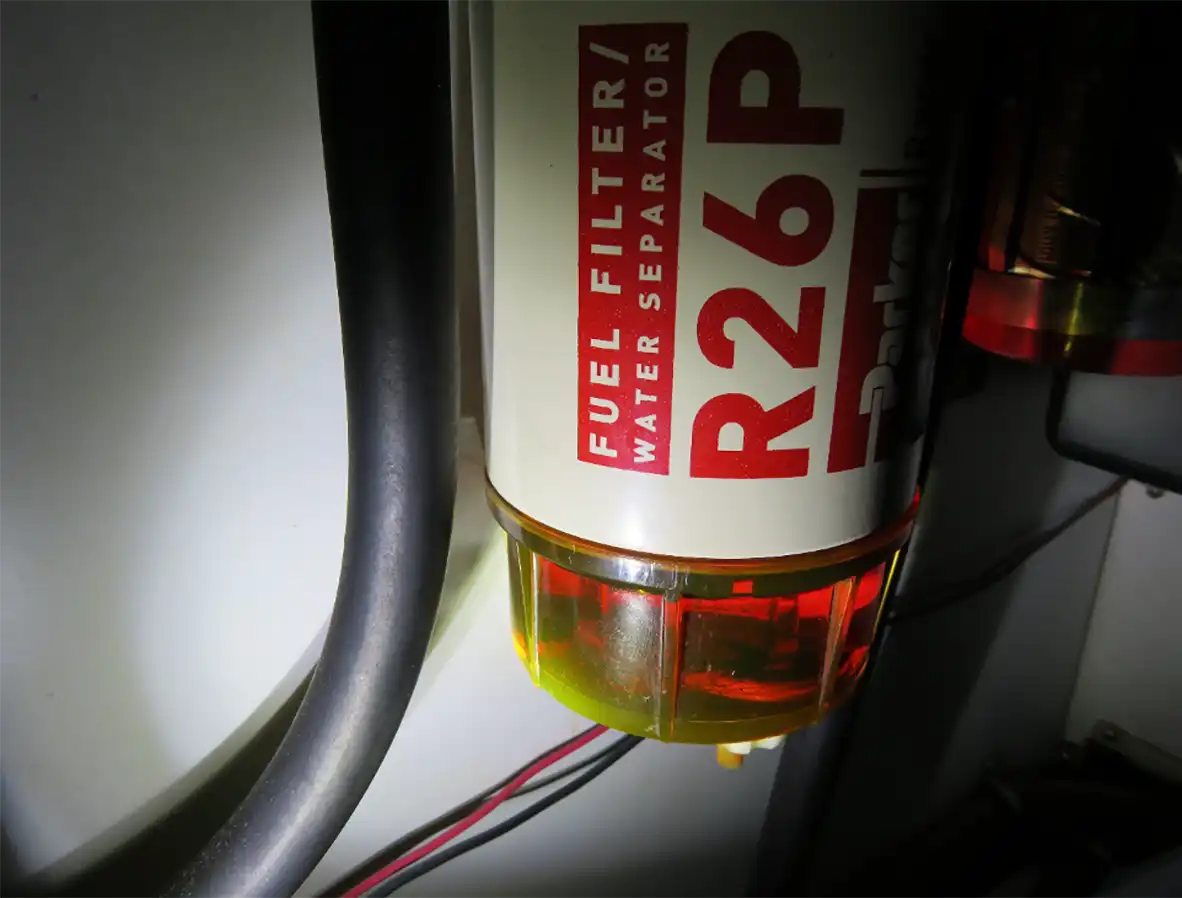 Keeping an eye on your Raycor fuel filters: The bowl of the fuel filter will tell you a lot about what’s going on in your fuel tank. If you are getting water in your fuel tank it will show up as clear or cloudy. Let the water settle and drain the filter from the petcock on the bottom of the filter bowl. Water could be getting in from something as simple as a leaking fill cap. The fill cap has a 0 ring on it, and it might be cracked or missing. If water in your fuel is persistent contact your local fuel polisher. And have your tanks cleaned and inspected.
Brown or black in your filter bowl is bio matter or algae growth. If you have a lot of bio matter in the filters change your filters regularly and carry a lot of spares. Adding a bio killer like Stanadyne will only make the matter worse. The bio matter will drop out of suspension and land on the bottom of the tank and create even more havoc.
What is bio growth or algae: Bio growth is a result of the water molecules in your fuel. The water molecules are smaller than the fuel molecules and fit in between the fuel molecules. The bio matter lives in the water molecules and feeds off the fuel molecules. Once inside your tanks the only way to get rid of bio matter is to have your tanks cleaned and fuel polished. Keep your fuel fresh by cycling fuel. Running your tanks nearly empty and then filling them completely at least once a year will keep fresh fuel in the tank. Keeping the tanks topped off in the winter will help keep out condensation and water and help reduce bio from growing in your tank.
Boats that have been sitting for a long time in a storage yard or at a brokerage dock can have a lot of problems with bio matter contamination. If you are considering buying an older boat, having your tanks cleaned and inspected is a really good idea.
Having your tanks cleaned: Tank cleaning is a specialty and needs to be accomplished by a dedicated fuel tank inspection and cleaning company. They work with large amounts of diesel over the water at great risk. Having your tanks nearly empty before they come out is really helpful. Fuel polishing is done by cutting access ports into the sides the fuel tanks at each baffle. A spay wand is inserted into the tank washing away the algae and debris from inside the tank. The fuel is sucked up and run through a big filter on the dock and returned back to the tank. The tank can be inspected and an assessment as to the condition of the tank can be made. The access ports will have a cover with a neoprene washer bolted back in place. Hopefully with a label and date on it.
Tanks can often be repaired if they have cracks or leaks in them. Your fuel tank professionals will know if they can salvage a bad tank and avoid the need for complete tank replacement.
That’s all I know about fuel.
Good sailing Steve